Useful information
Address
PLATEFORME 10 - Place de la Gare 16
1003 Lausanne
Schedules
Plateforme 10 tickets - 1 museum, full price (adults aged 26 and over)
15 CHF
Plateforme 10 tickets - 1 museum, reduced price, adults aged 26 and over (AVS, AI, unemployed, students, apprentices)
12 CHF
Plateforme 10 tickets - 1 museum, under the age of 26
Free
Plateforme 10 tickets - 3 museums, full price (adults aged 26 and over)
25 CHF
Plateforme 10 tickets - 3 museums, reduced price, adults aged 26 and over (AVS, AI, unemployed, students, apprentices)
19 CHF
Plateforme 10 tickets - 3 museums, duo (visit for two, adults aged 26 and over)
38 CHF
Plateforme 10 tickets - 3 museums, under the age of 26
Free
Free admission on the first Saturday of the month.
On 24 and 31 December: 10am to 5pm.
Closed on 25 December and 1 January.
Access
CFF train station: 3 minutes on foot
Bus 1, 3, 21, 60: «Lausanne-Gare» stop
Bus 6: «Cécil» stop
Metro M2: «Lausanne-Gare» stop
 +41 21 318 44 00
 Email
Email Website
More info
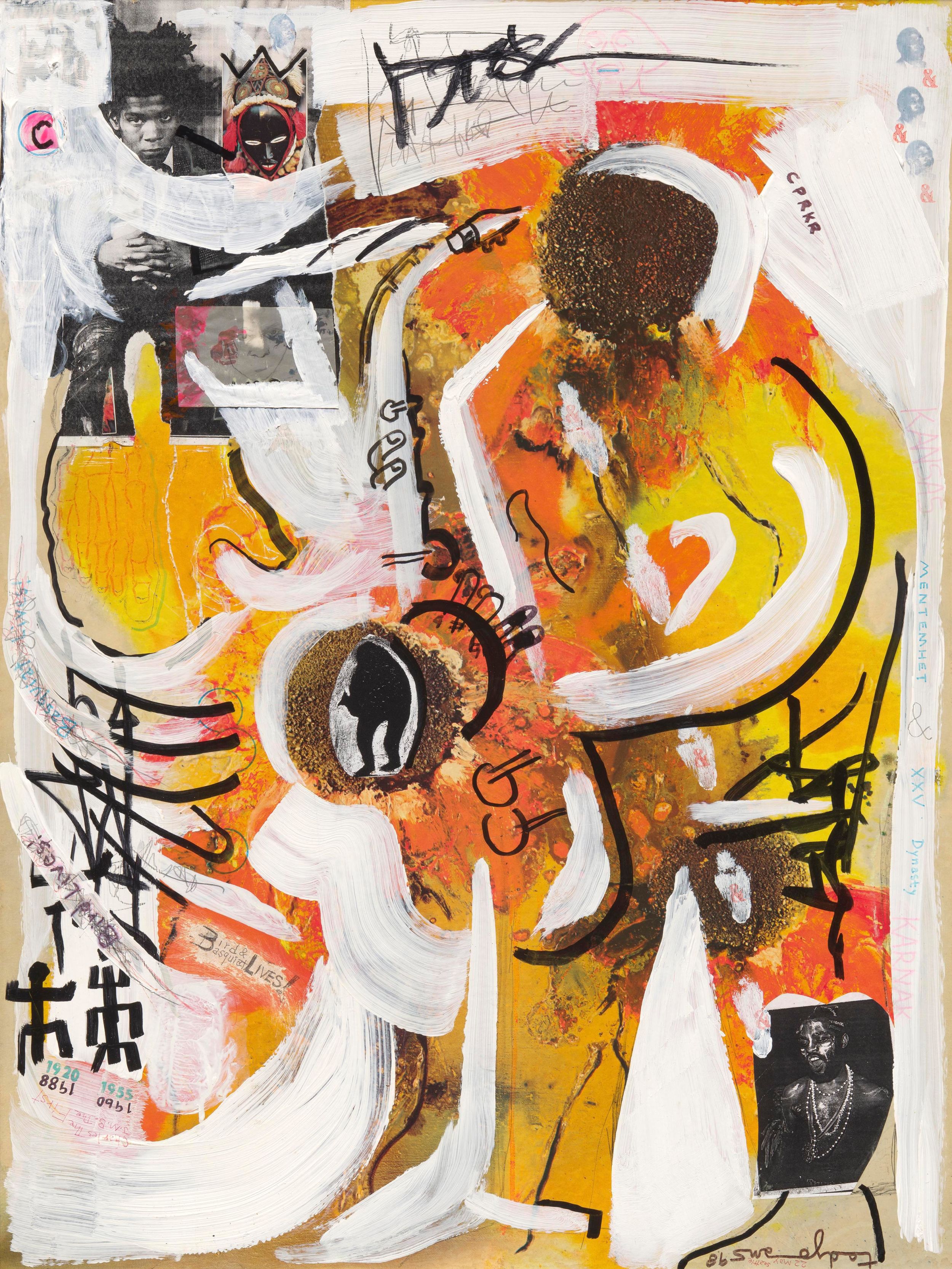
While Joans is best known today for his literary production - spanning poetry, jazz criticism, and autobiographical writing - his visual practice was equally expansive and daring. Throughout his life, he produced a vast and varied body of drawings, collages, and experimental films, marked by formal freedom and inventive spirit. Developed through extensive research and in close collaboration with the artist’s estate, the exhibition brings together an exceptional selection of these long-neglected works.
Born in 1928, Ted Joans grew up between Louisville, Kentucky, and Fort Wayne, Indiana, areas shaped by racial segregation in the United States. He was raised in a family of performing artists who worked on steamboats and first encountered Surrealism through magazines his aunt brought home from the white households where she was employed as a domestic worker.
Across language, sound, and image, Joans transformed collage into a playful yet subversive mode of expression. Deeply rooted in Black intellectual traditions, his oeuvre also engages in a rich dialogue with Western art history. Although André Breton described him as the “only black Surrealist”, Joans’ tricontinental trajectory far exceeded the boundaries of this movement, traversing multiple intellectual, activist, and geographical contexts that the exhibition seeks to trace. Fascinated by Africa, which he called “the Surrealist continent”, he consistently sought to challenge Eurocentric narratives through a distinctive vision that aimed to reconnect people of African descent with their cultural heritage.